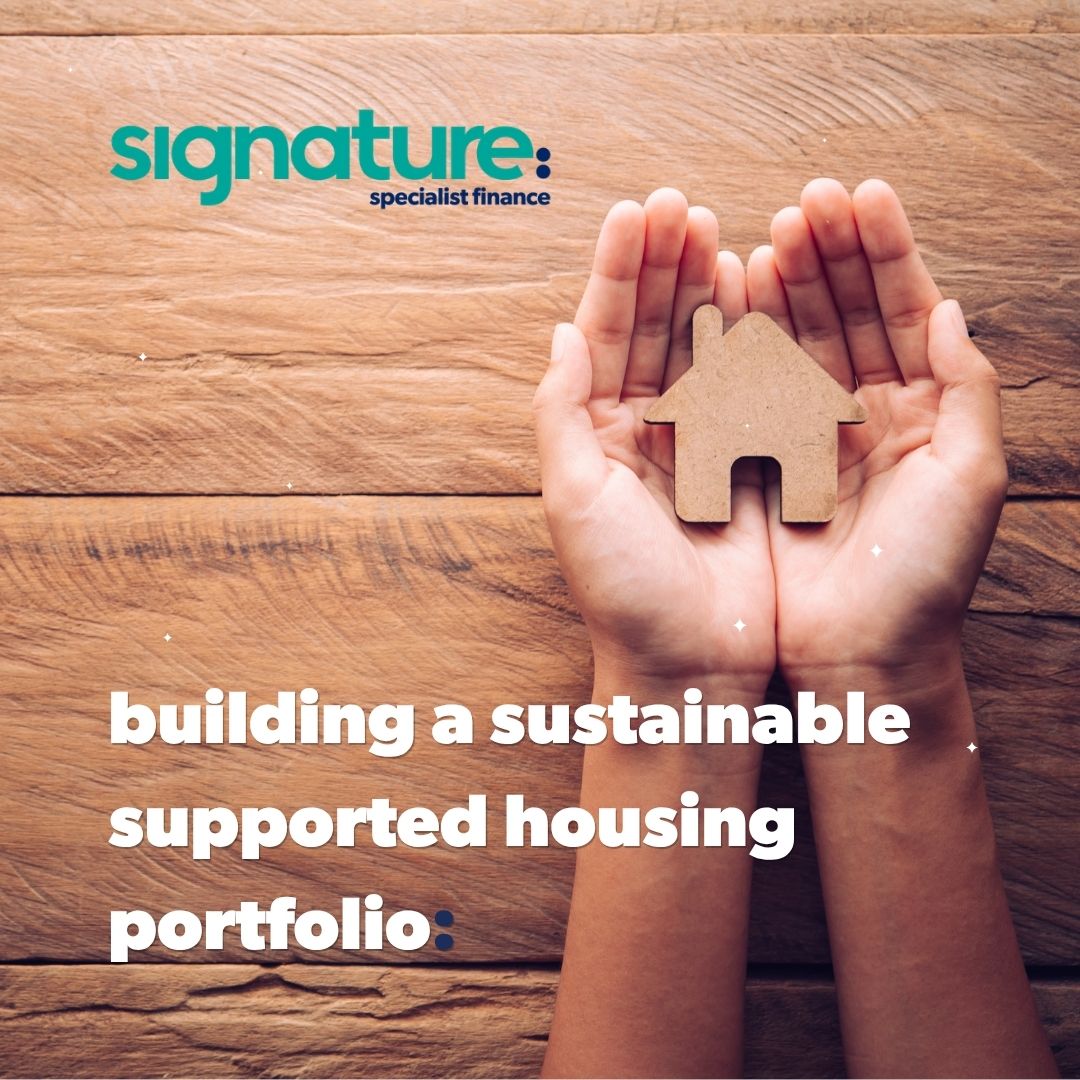
The Key to Navigating the Growing Supported Living Mortgage Market

Supported Living Mortgages

Supported living is a rapidly growing sector in the UK’s housing market, offering long-term accommodation for individuals with disabilities, mental health conditions, or the elderly to name a few. As this market continues to grow, investors are increasingly interested in securing mortgages to invest in this market.


Recent statistics show that the supported living market is growing at an unprecedented rate. According to a report by LaingBuisson, the sector has grown by almost 30% since 2015, with around 60,000 people now being housed in supported living accommodation across the UK. With this rapid expansion, there has been a corresponding increase in the number of supported living mortgages being taken out by investors.


But what is the key to navigating the growing supported living mortgage market? We’ve asked Nick Louis, Mortgage and Protection Advisor for his thoughts on how to steer through as the amount of supported living mortgages increase, and to answer some common questions investors may ask when considering those who live in supported living for a mortgage.


Over to Nick…


The demand for supported living mortgages has grown steadily over the past few years, with a 48% increase in the number of such mortgages taken out between 2015 and 2019. However, with a complex market and unique challenges, it can be challenging for investors to secure the right mortgage for their supported living investments.


Investing in supported living properties can be a lucrative opportunity for investors, but navigating the mortgage market can be challenging. Below I’ve answered some frequently asked questions that we get asked by Investors:


Q: What is Supported Living?

Supported living, in its simplest form, enables people with a range of needs to live in a property with added support when they would find it difficult to live alone. Examples of tenants that benefit from supported living are asylum seekers, sufferers of domestic abuse, those who are homeless and those with learning difficulties to name a few.


Q: Does the Term of the lease affect the lenders available?

The length of the lease does affect the lenders available. The most commonly acceptable lease is a 5-year lease, and there are lenders that will consider shorter leases. If the lease is longer than 5 years you may struggle to find a mainstream lender that is comfortable with it, which means that it could be considered on a Semi-Commercial proposition.


Q: What if I want to provide 24 Hour Care? 

The number of lenders that will accept 24-hour care is very limited and this could restrict you being able to let the property. If the property is to be used for 24-hour care, the lender will want to understand if the person providing the care will sleep in the property.


Q: The Registered Provider have asked about housing tenants below the age of 18, where do I stand with this?

The lenders are more cautious with tenants under the age of 18. Having a minor in your property will most probably mean that you will have a carer in the property 24 hours a day, which will restrict what lenders are comfortable with the property.


Q: Are Break Clauses required in the Lease?

A break clause allows both you and the landlord to give notice to end the tenancy early. There’s no standard format for a break clause. In most cases, you can only use the break clause on or after a certain date. Some contracts only allow you to use the break clause at an exact point in the tenancy, but not after that date has passed. Most lenders will require a break clause as part of the lease agreement.


Q: Does it have to be residential home care?

Supported living doesn’t just have to be residential home care, larger commercial care homes can also be financed whether this for child or elderly care, although this type of finance will be considered under full commercial lending.


 Q: Will my Lender allow Supported Living Tenants?

Mortgage lenders are starting to understand supported living more, with more lenders allowing supported living under their lending criteria. There are only a limited number of specialist and semi-commercial lenders that do offer supported living as standard and it is important to understand if your lender is one, before signing a lease with a provider. Please contact your present lender to confirm this is acceptable, as you could be in breach of your Mortgage Terms and Conditions.


How we can help


The supported living mortgage market is a rapidly growing sector in the UK’s housing market, offering significant investment opportunities for those willing to navigate the complex market.


Our team of expert advisers have a wealth of experience in the supported living market, and we are dedicated to providing tailored mortgage solutions to suit our clients’ unique needs. We understand that no two investments are the same, and we work closely with our clients to provide the best possible mortgage solution for their needs.


If you are considering a supported living mortgage but unsure where to start, you can speak to one of our friendly advisors by getting in touch here.

Latest news and articles

  • light refurbishment project for an investment
    28 April 2026

    Refurbishment Finance Guide: How to Fund Property Renovation Projects

    What is Refurbishment Finance? Refurbishment finance is a specialised short-term funding solution designed for property investors and developers. Unlike a standard mortgage, this finance is tailored for properties requiring work, whether that’s a quick aesthetic refresh or a total structural overhaul. By utilising this funding, investors can purchase and renovate properties, ultimately increasing both the capital value and the rental income (often referred to as the BRRR strategy: Buy, Refurbish, Rent, Refinance). Key Benefits for Investors:Speed: Access funds quickly to move on time-sensitive deals. Leverage: Borrowing is often based on the Gross Development Value (GDV). Flexibility: Lending criteria designed for ‘unmortgageable’ properties.Light vs. Heavy Refurbishment: Which Do You Need? Lenders categorize projects based on the scale of work. Understanding where your project sits is crucial for securing the right rate and terms.Feature Light Refurbishment Heavy RefurbishmentTypical Works Decorating, new kitchens/bathrooms, flooring, and minor electricals. Extensions, structural changes, layout reconfigurations, and conversions.Planning Permission Usually not required, if under Permitted Development. Often required for structural changes or Change of Use.Funding Structure Standard bridging finance. Development-style drawdowns or staged payments.Exit Strategy Refinance to BTL or immediate sale. Long-term commercial mortgage or sale.  Signature Specialist Insight: Even if a project seems light, if you are changing the use of the building (e.g., turning a house into an HMO), most lenders will classify this as Heavy Refurbishment. How Lenders Assess Your Project Specialist lenders like Signature look beyond the bricks and mortar. We evaluate the business case of your renovation. The assessment typically focuses on four pillars:The GDV (Gross Development Value): The estimated value of the property once works are completed. The Schedule of Works: A detailed breakdown of costs and timelines. Borrower Experience: Your track record with similar projects. The Exit Strategy: How you intend to repay the loan (e.g., via a Bridging Loan exit or a long-term finance product).Maximizing ROI: Best Practices for Investors To ensure your refurbishment project remains profitable and attractive to lenders, follow these industry standards:Build a 10-15% Contingency: Unexpected costs are a reality of renovation. Lenders want to see that you’ve budgeted for the unknowns. Focus on High-Impact Upgrades: Prioritise kitchens, bathrooms, and energy efficiency (EPC ratings), as these offer the highest return on investment. Define Your Exit Early: Know whether you are flipping for profit or holding for yield. This dictates your finance structure from day one. Verify Your Contractors: Use experienced, insured tradespeople. A lender may request to see their previous work before releasing funds for heavy refurbishments.Ready to Scale Your Portfolio? At Signature Specialist Finance, we don’t just provide capital; we provide the expertise to help you navigate complex renovations. Whether you are tackling a light cosmetic update or a major commercial-to-residential conversion, our team is here to structure a deal that works for you. Speak to a Specialist Today ...
  • Unmortgageable property refurbishment using bridging finance
    14 April 2026

    Bridging Finance: When to Use It and How to Use It Properly

    When Should You Use Bridging Finance? 1. Financing ‘Unmortgageable’ Properties Traditional lenders have a strict checklist. If a property lacks a functional kitchen or bathroom, has structural issues, or is in a state of severe disrepair, it is deemed ‘unmortgageable.’The Bridging Solution: We look at the potential value. Bridging finance allows you to purchase the ‘unmortgageable’ wreck, complete the heavy refurbishment, and then refinance onto a standard mortgage once the property is habitable.2. Auction Purchases (The 28-Day Race) When the hammer falls, the clock starts. You usually have 28 days to complete. Standard mortgages rarely move that fast. A bridging loan can be secured rapidly, ensuring you don’t lose your deposit. 3. Property Conversions & Refurbishments Whether it’s a ‘light refurbishment’ (cosmetic) or a ‘heavy refurbishment’ (structural/conversions), bridging provides the capital to buy and the flexibility to renovate before you sell or flip to a Buy-to-Let mortgage. 4. Breaking the Property Chain Found your dream investment but waiting for another sale to close? Bridging finance allows you to ‘break the chain’ by securing the new property using the equity in your current portfolio. Bridging vs. Traditional MortgagesFeature Bridging Finance Traditional MortgageSpeed 1–3 weeks 2–4 monthsTerm 1–24 months 15–30 yearsCriteria Property potential & Exit strategy Personal income & Current conditionMonthly Cost Usually rolled-up (no monthly pay) Monthly interest + CapitalThe Golden Rule: Your Exit Strategy A bridging loan is only as good as the plan to pay it back. Because these are short-term tools, lenders will insist on a clear exit strategy. The most common exits include:Refinancing: Moving to a long-term Buy-to-Let or Commercial mortgage once works are complete. Sale of Property: Selling the refurbished unit to pay off the bridge and take your profit. Cash Settlement: Using funds from another asset sale.Best Practices for InvestorsWork with Specialists: Use brokers who understand the difference between a ‘light refit’ and a ‘ground-up development.’ Overestimate Timelines: If you think a refurb will take 4 months, take a 9-month bridge. It’s cheaper to pay a small exit fee than to face a default. Factor in All Costs: Remember to account for arrangement fees, valuation fees, and legal costs in your ROI calculations.Ready to Move Fast? If you have found a property that needs a quick injection of capital or a creative solution for a tricky condition issue, we are here to help.For Commercial & Investment Enquiries: Contact Our Team Today For Residential & Regulated Enquiries: Visit Signature Mortgages and Protection...
  • 2 April 2026

    Is Specialist Property Finance Risky?

    Why High Street Banks Say No (And Why We Say Yes) Traditional banks are built for ‘vanilla’ transactions: habitable houses and steady salaries. Their systems rely on automated boxes; if your project doesn’t fit, it’s rejected. Specialist lenders exist to bridge the gap where traditional logic fails. We look at the future value and the viability of the exit, rather than just the current state of the bricks and mortar. Comparison: Traditional vs. Specialist LendingFeature High Street Banks Specialist LendersFocus Past performance & current status Future potential & project viabilitySpeed 3–6 months 2–4 weeksProperty Condition Must be habitable Can be derelict or ‘unmortgageable’Decision Making Rigid algorithms Human underwriting & experienceWhere the Real Risk Lives (And How to Kill It) If the loan itself isn’t the risk, what is? Professional investors focus on four specific areas to ensure their projects remain safe and profitable. 1. The Exit Strategy Vacuum A bridging loan is a sprint, not a marathon. The biggest risk is reaching the end of the term without a way to repay.The Fix: Never settle on one exit. If your plan is to sell, have a ‘Plan B’ to refinance onto a Buy-to-Let mortgage if the market slows down.2. The Optimism Bias in Construction Underestimating costs is the fastest way to erode equity. From material price surges to discovering structural surprises, projects rarely go perfectly to budget.The Fix: Always bake in a 10–15% contingency fund. If you don’t use it, it’s extra profit. If you do, it’s a lifesaver.3. The GDV Trap Overestimating the Gross Development Value (GDV) leads to over-borrowing. If the market dips by 5%, an over-leveraged investor can find themselves in negative equity.The Fix: Use ‘Stress-Tested’ valuations. Base your numbers on conservative, comparable evidence from the last 3-6 months, not your ‘hopes’ for next year.4. The Timeline Ticking Clock Delays in planning permission or contractor availability can eat through your interest budget.The Fix: Build a ‘time buffer’ into your loan term. It is often cheaper to take a slightly longer loan and pay it off early than to scramble for an expensive extension at the last minute.How Professionals Manage the Borrowing Journey Experienced developers don’t avoid risk; they manage it. They treat finance as a strategic partner.Early Engagement: Don’t wait until you’ve won the auction to call a broker. Get “In Principle” figures before you bid. The Power Team: Surround yourself with an experienced solicitor and a specialist broker who understands the nuances of the “heavy lifting” required in property conversion. Liquidity is King: Keep enough cash in reserve to cover at least 3-6 months of unexpected delays.Summary: Is it Risky? Specialist finance is “risky” only when it is used to mask a poor investment. When used to acquire a distressed asset, add value through renovation, and exit into a long-term mortgage, it is one of the most powerful wealth-building tools available to the modern investor. Quick Tips for Success:Plan the end before the beginning. (The Exit) Budget for the worst case. (The Contingency) Work with experts, not algorithms. (The Broker)Ready to structure your next deal? Understanding the mechanics of specialist finance is the first step to scaling your portfolio. Whether you’re looking at your first flip or a multi-unit development, our team is here to help you navigate the risks and unlock the opportunities. Contact Signature Specialist Finance today ...